
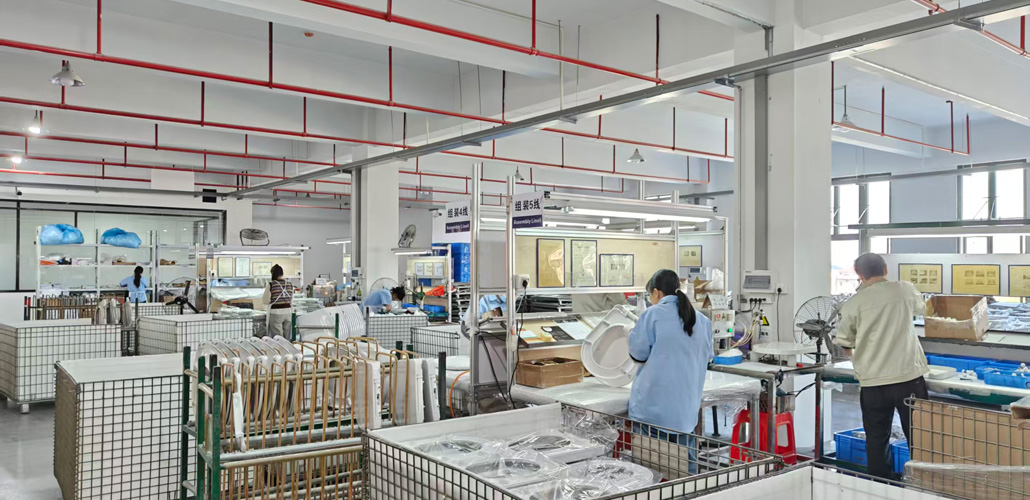
For importers sourcing toilet seats from China, consistent quality is the single most critical factor for business success. A defective shipment can lead to costly returns, damage your brand reputation, and erode customer trust. The key to avoiding these pitfalls lies in understanding and leveraging the manufacturer’s internal quality control (QC) system.
A truly robust toilet seat quality control in China is not a single final check. It is a comprehensive, multi-stage engineering process integrated into every step of production—from raw material to packed carton. This guide breaks down this process, giving you the knowledge to identify reliable suppliers and ensure every product you import meets your market’s standards.
Quality is Built In, Not Just Checked
Leading manufacturers operate on a “Prevent-Detect-Correct” philosophy. The goal is to prevent defects at the source through controlled processes, continuously detect potential issues during production, and have systematic procedures to correct any deviations before they affect the entire batch. This proactive approach is far more effective and less costly than relying solely on final inspection to sort out defective products.
1、Incoming Material & Process Control – Building Quality from the Start
Quality is fundamentally determined by what goes into the product and the stability of the process that shapes it.
-
Certified Raw Material Management: Reputable suppliers do not compromise on materials. They use traceable, virgin-grade Polypropylene (PP) resin from certified sources. Each batch should be accompanied by a Material Data Sheet, and factories often conduct incoming tests for key properties. This ensures the base plastic has the correct strength, durability, and flow characteristics for injection molding.
-
Precision Tooling and Machine Calibration: The condition of the injection molds is paramount. High-standard factories have a strict schedule for mold maintenance, polishing, and venting to prevent surface defects like flow lines, sinks, or burns on the finished seat. Furthermore, injection parameters—temperature, pressure, injection speed, and cooling time—are digitally controlled and logged. Consistent machine settings are crucial for producing identical, dimensionally stable parts in every production run.
2、In-Process Visual & Dimensional QC – The Art of Catching Flaws Early
While the process is designed to prevent errors, human and automated checks during production form the first line of defense.
A. 100% Visual Inspection Station:
After the seat is ejected from the mold and cools, it passes to a dedicated inspection station under standardized lighting. Trained inspectors examine every single unit for:
-
Surface Aesthetics: Checking for gloss uniformity, color consistency (against approved master samples), and the absence of critical visual defects such as cracks, black speck contamination, silver streaks, or severe warping.
-
Structural Integrity: Inspecting the underside and mounting areas for any signs of short shots (incomplete filling) or excessive flash (thin excess plastic at mold seams), which are trimmed manually or mechanically.
-
Edge and Finish Quality: Ensuring all edges are smooth to the touch, free of sharp burrs, and that any textured surfaces are uniform.
B. Dimensional Verification Checks:
At predetermined intervals, sample seats are taken from the production line for precise measurement. Using calipers, coordinate measuring machines (CMM) for critical parts, technicians verify:
-
Hole-to-Hole Distance and Diameter: This is the most critical dimension for universal installation compatibility. Even a millimeter’s deviation can render a seat unusable on a standard toilet.
-
Overall Contour and Profile: Ensuring the seat’s shape matches the design specifications and will fit the intended toilet bowl contours correctly.
-
Wall Thickness: Using ultrasonic gauges to ensure consistent thickness, which directly relates to the seat’s strength and weight.
3、Rigorous Performance & Durability Testing – Simulating a Decade of Use
A seat that looks perfect must also function flawlessly for years. This is validated through simulated aging and stress tests in a dedicated laboratory.
-
Hinge Cycle Endurance Test (The Core Reliability Test): This is the most telling performance test. Seats are mounted on automated rigs that repeatedly open and close them. A high-quality soft-close hinge must operate smoothly and quietly for a minimum of 50,000 to 100,000 cycles without failure—simulating 10-15 years of regular use. The closing speed and damping consistency are monitored throughout the test.
-
Static Load and Impact Strength Test: To ensure the seat won’t crack under weight, a static load (often over 100kg) is applied to the center. For impact resistance, a drop test with a weighted object is conducted on the surface. These tests confirm the structural integrity of the raw material and design.
-
Chemical and Stain Resistance Validation: Given that toilet seats are frequently cleaned, samples are exposed to common household chemicals like bleach, acidic cleaners, and cosmetics. They are also tested with staining agents like coffee or dye. The surface is then evaluated for discoloration, etching, or permanent staining, ensuring it is easy to clean and maintain its appearance.
-
Compatibility and Assembly Check: A practical but vital test involves physically mounting sample seats on popular toilet models from brands like TOTO, Kohler, and American Standard to guarantee a perfect, wobble-free fit. The installation hardware is also tested for stripping and corrosion resistance.
4、 Final Pre-Shipment Inspection (PSI) – The Objective Safety Net
Before packaging, a final, formal audit is conducted. For critical orders, this is often performed by a third-party inspection company (e.g., SGS, TUV, Intertek) or a separate internal QC team not involved in production. This audit follows internationally recognized Acceptable Quality Level (AQL) sampling standards.
-
Statistical Sampling: Based on the order size, a random sample of finished, packed seats is selected from the warehouse according to AQL tables (like ANSI/ASQ Z1.4).
-
Comprehensive Re-check: The sample undergoes a condensed but thorough repeat of visual, dimensional, and functional tests.
-
Packaging and Shipping Mark Audit: Inspectors verify that the inner packaging (foam protectors, poly bags), outer carton strength, printing accuracy, and shipping marks are all correct and sufficient to protect the goods during ocean freight.
-
Detailed Reporting: The result is a formal Inspection Report with pass/fail status, photographic evidence of any defects found, and clear data. This report provides the importer with objective, documented assurance before the goods are shipped.
Conclusion: Turning Quality Control into Your Competitive Advantage
Navigating toilet seat quality control in China successfully requires moving beyond price-centric negotiations to a partnership-centric approach. The most reliable suppliers are those who are transparent about their processes, welcome your specific quality requirements, and see your standards as an integral part of the production order.
As an importer, your power lies in due diligence. Use this guide as a checklist. Ask potential suppliers to walk you through their process for each of these four phases. Request their QC procedure documents, ask to see test reports from recent batches, and insist on defining clear AQL levels for your pre-shipment inspection. A factory that hesitates to provide this transparency is a significant risk.
Ultimately, investing time in verifying a manufacturer’s QC system is the most effective way to de-risk your supply chain. It ensures that the competitive prices offered by Chinese manufacturing translate into reliable, high-quality products that satisfy your end-customers and build the long-term profitability and reputation of your business. By partnering with a supplier whose quality control you understand and trust, you transform a complex logistical challenge into a stable foundation for growth.
Contact with Beewill Sales Team

Hi, I’m Shiny from Beewill Sanitary. Contact me to start your project here.