
For a global importer or distributor, choosing between soft-close and standard toilet seats is not just about product features—it’s a strategic decision that hinges on understanding your specific market’s economic level, housing trends, consumer preferences, and cultural habits. This guide breaks down the global landscape to help you determine which type offers the best opportunity in your region.
The Global Market Overview: A Tale of Two Features
Before diving into regions, let’s clarify the core value proposition of each:
-
Soft-Close Seats: These seats use a hydraulic or pneumatic damping hinge that allows the lid and seat to lower slowly and silently, automatically. The primary benefits are preventing slamming noise, increasing safety (especially for homes with children or elderly), and conveying a sense of premium quality and modern living.
-
Standard Seats (Quick-Release): These are the traditional, non-damped seats. They are purely functional, lightweight, and most importantly, cost-effective. Their simplicity is their strength, appealing to markets where price is the paramount concern.
The choice often comes down to a trade-off between perceived value/comfort and initial cost. Now, let’s see how this plays out around the world.
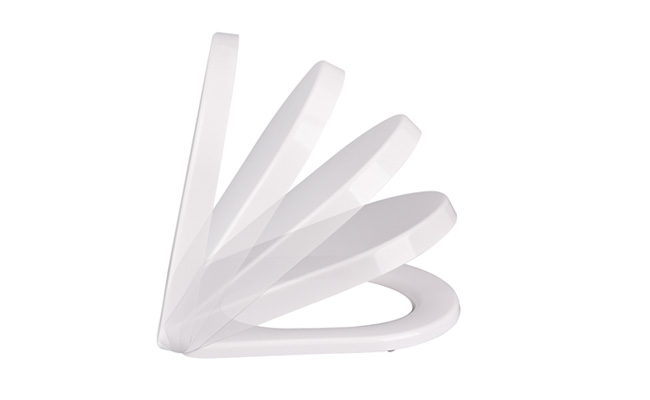
Soft close toilet seat with dampers in the hinge
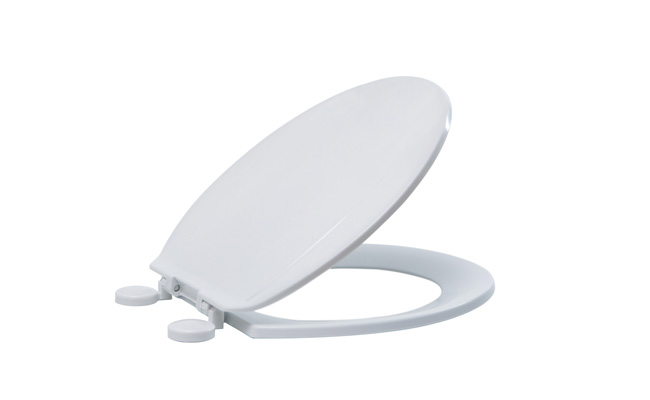
Standard normal close toilet seat without dampers inside
1. North America & Western Europe: The Stronghold of Soft-Close
In these mature, high-income markets, soft-close technology has transitioned from a premium option to a near-standard expectation, especially in the mid-to-high-end segments.
-
Market Drivers:
-
Consumer Preference: Homeowners and property developers strongly associate soft-close with quality, safety, and a quiet, comfortable home environment.
-
Housing Trends: In North America, where bathroom remodels are common, soft-close seats are a low-cost, high-impact upgrade. In Western Europe, space-efficient living in apartments makes noise reduction a valuable feature.
-
Distribution Channels: Major home improvement retailers (Home Depot, B&Q, Leroy Merlin) and wholesale suppliers prominently feature soft-close models, driving mainstream adoption.
-
-
Recommendation: For these markets, focus on soft-close seats is essential. The standard seat is largely relegated to the budget replacement segment (e.g., low-cost rental properties, basic DIY repairs). Your product differentiation should focus on damping quality (ensuring a smooth, consistent close), durable materials, and aesthetic design to match contemporary bathroom styles.
Mark: Beewill has more than 15 years of experience to supply high-quality toilet seats to the middle and high-end market to these market. And the best-selling toilet seat is with the one push button quick release and soft close hinge in the European market, but also some customers choose the stainless steel standard close seats. Below are the pictures for these two kinds of hinges.
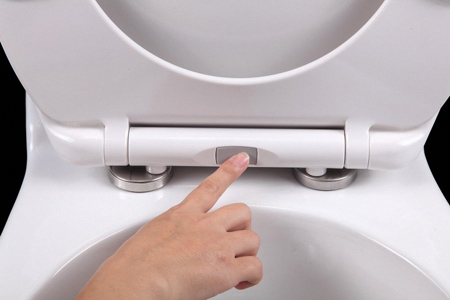
One push button quick release and soft close hinge
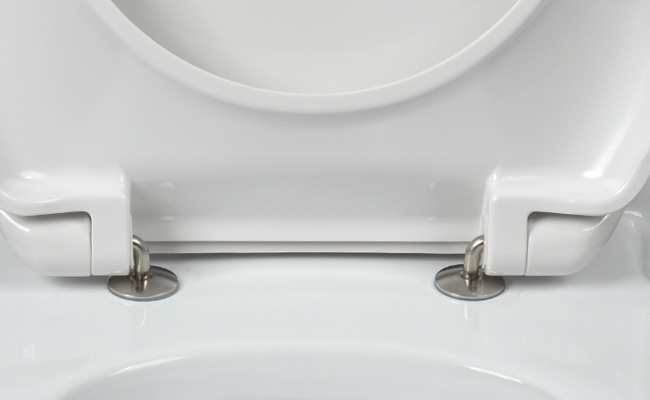
Stainless steel normal close hinge
2. East Asia & Australia: A Diverse Landscape Ranging from Premium to Practical
This region showcases a clear split, reflecting varying levels of economic development and unique consumer cultures.
-
Japan & South Korea: Here, the conversation often skips past soft-close to integrated smart toilets. The basic seat market is niche. However, as a stand-alone product, only high-quality soft-close seats would be considered, with an emphasis on perfect functionality and compact design.
-
Australia & New Zealand: Similar to North America, soft-close is highly popular and expected in new builds and renovations. The market is receptive to both basic and premium soft-close models.
-
Southeast Asia & Mainland China: This is a rapidly evolving and highly segmented market. In major cities and growing middle-class households, soft-close seats are a sought-after upgrade symbolizing modern life. In contrast, the vast rural and entry-level urban markets remain fiercely price-sensitive, making standard seats the dominant volume driver. The key is to offer a clear product portfolio for both tiers.
-
Recommendation: A dual-strategy is most effective. Offer well-designed, reliable soft-close seats for urban, middle-class consumers. In parallel, maintain a range of durable, cost-optimized standard seats for price-driven projects and developing areas. In China specifically, e-commerce platforms are a crucial sales channel for both types.
3. Eastern Europe, Latin America, & the Middle East: The Growth Frontier for Soft-Close
These emerging economies represent the most dynamic battleground between standard and soft-close.
-
Market Dynamics:
-
Standard Seats currently dominate due to high price sensitivity and a large volume of basic construction.
-
However, soft-close is the clear growth segment. As disposable incomes rise and exposure to global trends increases, consumers in capital cities and tourist-centric areas (e.g., Dubai, Mexico City, Warsaw) are actively seeking upgrades.
-
-
Recommendation: Do not ignore this market. Positioning is key. Instead of competing on the absolute lowest price, introduce “value-engineered” soft-close seats. These products offer the core soft-close benefit but may use more cost-effective materials or simplified packaging. Market education is crucial—highlight the safety and durability benefits to justify the price premium over standard seats. This builds brand loyalty as the market matures.
4. South Asia & Africa: The Domain of the Standard Seat (For Now)
In these price-elastic markets, the standard toilet seat is overwhelmingly the volume leader.
-
Market Reality: The primary purchasing criterion is lowest possible cost to serve massive populations and large-scale, budget-conscious housing projects. Functionality trumps features. Durability in hot/humid climates and resistance to low-quality water are often more critical concerns than a silent close.
-
Recommendation: Focus on robust, reliable standard seats. Competitiveness here depends on supply chain efficiency, lean manufacturing, and excellent logistics to keep costs down. Soft-close seats may only have a niche presence in luxury hotels, high-end apartments, or expat-focused stores in major commercial hubs.
Conclusion & Actionable Advice
There is no single “better” product globally. The right choice is dictated by your target customer within your specific market.
Ask yourself these questions to decide:
-
What is the average income and spending priority of my end-consumer? (Higher income → Soft-close focus)
-
Who is my immediate customer? (A developer building budget apartments needs standard seats; a bathroom boutique needs soft-close).
-
What is the local housing stock like? (Older, renovation-heavy markets → upgrade potential for soft-close. New, mass construction → potential for both, depending on project tier).
Final Tip: As a savvy importer, consider carrying both lines. Use the standard seat to secure high-volume contracts and maintain cash flow. Use the soft-close seat to build brand value, capture higher margins, and grow with your market’s increasing sophistication. By understanding these global nuances, you can stock the right products that turn market needs into your profits.
Contact with Beewill Sales Team

Hi, I’m Shiny from Beewill Sanitary. Contact me to start your project here.